Surface Water Solutions at Garages
Understanding the applicable NZBC clauses for a durable, functional and compliant drainage system at the garage door.
Servicing surface water at a garage door is often complicated by incorrect detailing or by referencing the wrong acceptable solution. To design a compliant and durable system, it is crucial to understand how the relevant NZBC clauses apply specifically to garage entries.
Understanding the Applicable Acceptable Solutions
E2/AS1, section 9.1.3.4 outlines the requirements for meeting the acceptable solution at a garage door opening. Key elements include:
-
- A 50 millimetre set-down from the internal slab to the exterior surface
- The formation of a rebate at the doorway
- A ramped fall to the external paving
- A sealed base beneath the garage door
These elements form the foundation of a compliant detail that prevents internal moisture ingress.
The clause also states that there must be provision to drain water away at the opening. This part is often misunderstood. Designers sometimes reference E2/AS1 section 7.3.2.1, which applies to ground floor level access at pedestrian doors, not garages. This section calls for 150 x 200 millimetre channels, minimum lengths, and falls, requirements that do not apply to garage entrances.
Garage entries are addressed separately in E2/AS1 section 9.1.3.4, and the drainage requirements are significantly different.
Compliant Ways to Drain Water Away at the Garage Opening
1. Falls in Paving
Creating falls in the concrete or paving so water flows away from the garage is the most common solution. Water is then collected in a sump further down the driveway.
This method eliminates the need for drainage directly at the door and combines:
-
- E2 (Internal Moisture) compliance
- E1 (Surface Water) management
A plastic stormwater pit with a cast iron grate will typically meet vehicle-loading expectations for residential driveways.
2. Installing a Surface Water Drain (Channel Drain)
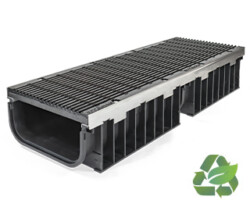
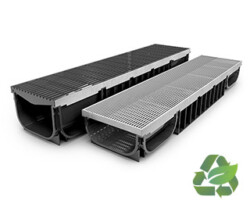
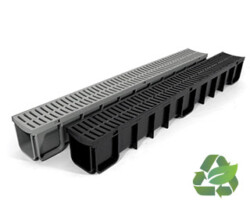
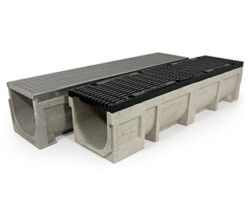
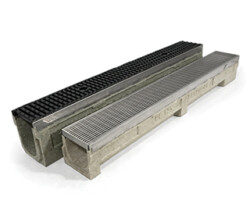
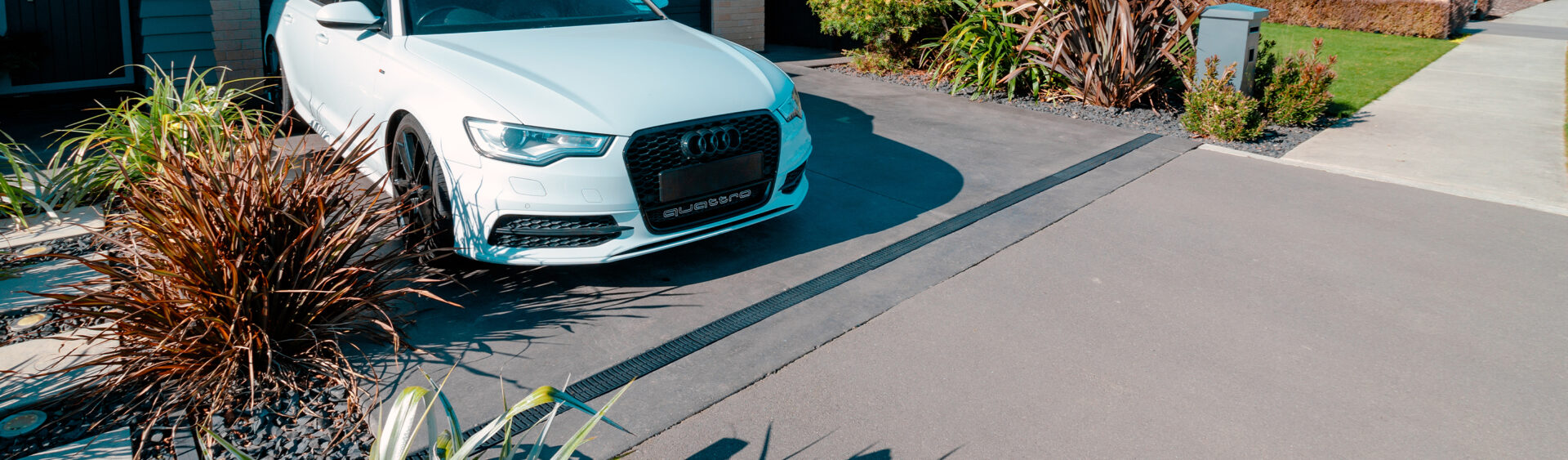
Where falls cannot be achieved, for example, when the driveway slopes toward the garage, drainage can be provided via a three-sided channel drain positioned at the doorway.
This channel must comply with E1 surface water requirements, which in turn satisfies the E2 requirement that water be drained away.
Key installation considerations include:
Offset the channel from the slab edge, allowing it to be fully encased in freshly poured concrete
- This ensures vehicle loadings are distributed through the concrete encasement
- Butting a channel against a dry slab edge will not achieve the required strength or durability
Provide a sump before connection to stormwater
- This can be an inline sump for minimal visual impact
- Or a sump placed elsewhere along the driveway
Select a channel sized to meet rainfall demand
- Rainfall events are typically calculated using a 1:50-year design storm
- Channel size, grate selection, outlet size and flow tests must align to ensure adequate capacity
Channel drains provide an effective solution where direct collection at the garage door is necessary, and various grate materials and load ratings are available to suit the environment.
Selecting the Correct System
The selection of any surface water drain should be based on:
-
- Calculated rainfall demand
- Required outlet capacity
- Load rating requirements (e.g., vehicle traffic)
- Material selection for durability
- Compatibility with sump and stormwater connections
Allproof designs and manufactures surface water drainage solutions for a wide range of residential and commercial applications. Supported by flow rate testing and demand calculations, Allproof can assist in selecting and specifying the correct system for each project. This reduces RFI requests, simplifies compliance with acceptable solutions, and ensures a durable, functional outcome at the garage door.
Related Products